The What-If, What-Is Bedtime Game: 3 Calm Steps for a Worried Little Mind
A gentle three-step bedtime game for worried little minds: name the cloud, find a what-is, and breathe.
Shamal Iroshan
October 11, 2026 4 min read
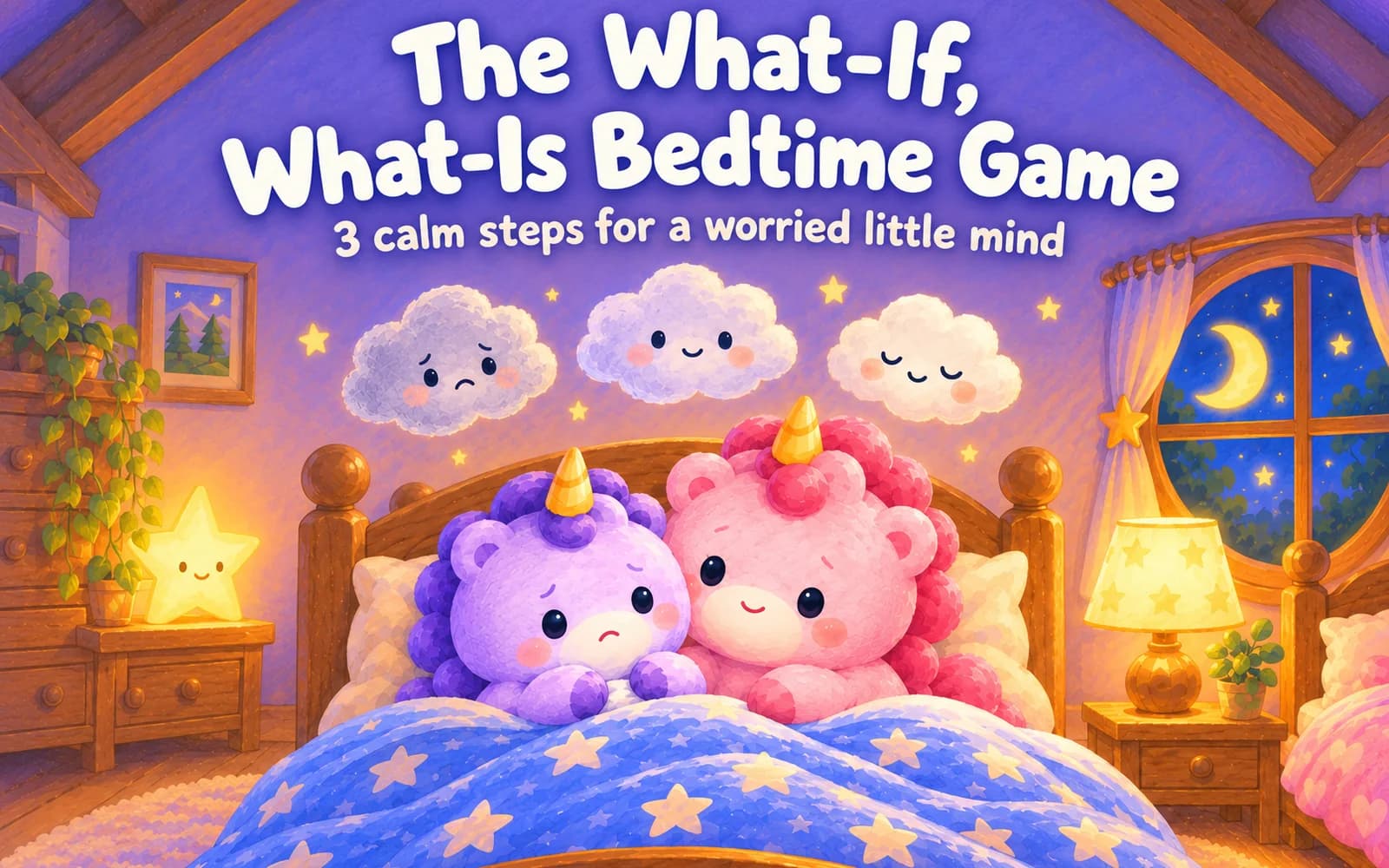
Cover image: An original AI-generated illustration of Twinkii and Lumii, the two unicorn siblings from my picture book, not a photograph.
It is bedtime. The lights are low, the day is over, and suddenly your child has a lot to say. What if it rains at the picnic? What if I forget the words? What if something is in the dark? Small worries tend to grow louder when everything else gets quiet.
This short guide shares a gentle three-step game you can play at bedtime. It takes a few minutes, needs no props, and works for most children who are old enough to talk about their worries.
Disclosure: I wrote the picture book mentioned at the end of this guide, Twinkii and the What-If Clouds. The link to it goes to a page on this site with an Amazon affiliate link, so I may earn a commission on qualifying purchases in addition to my author royalties.
Why worries get loud at bedtime
During the day children are busy. At night there is nothing to watch, nothing to build and nothing to answer, so the mind fills the space with "what if" questions. This is very common, and it does not mean something is wrong. It helps to remember that a what-if is a picture the mind drew about something that has not happened.
The game in three steps
- Name the cloud. Invite your child to say the worry out loud, as if it were a small gray cloud floating above the bed. "That sounds like a what-if cloud. What does it say?" Giving the worry a shape makes it feel smaller and easier to look at.
- Find a what-is. A what-is is something true right now, right here. Ask: "What is true right now?" It might be "I am in my bed," "the door is closed," "you are here," or "my blanket is warm." For every what-if, find one what-is. Let your child choose it, even if it seems small.
- Smell the flower, blow out the candle. Pretend to hold a flower and breathe in slowly through the nose. Then pretend to hold a candle and blow it out slowly through the mouth. Do this two or three times. Slow breathing helps the body settle, and the body often calms down before the mind does.
An example
Child: "What if it rains on our picnic tomorrow?"
You: "That sounds like a what-if cloud. What is true right now?"
Child: "I am in bed. It is not raining right now."
You: "Yes. Let's smell the flower and blow out the candle."
You do not need to argue the worry away or promise that nothing will go wrong. You are simply showing your child a way back to the room they are in.
Five things you can say
- "I am right here."
- "That sounds like a what-if."
- "What is true right now?"
- "Let's take one slow breath together."
- "You are safe, and you are loved."
A few tips
- Keep it short. Three or four minutes is plenty, and calm matters more than getting every step right.
- Play it at the same point each night, such as after the story and before the lights go out, so it becomes a familiar routine.
- Let your child be the teacher sometimes. Ask them to guide you through the game. Children often remember a tool better when they get to share it.
- Let the worry be heard before you move on to the what-is. Feeling listened to comes first.
When to look for more help
A bedtime game is a small, everyday tool. It is not a treatment, and it is not a substitute for professional care. If your child's worries are intense, frequent, or getting in the way of sleep, school or daily life, please talk with your child's doctor or a qualified professional.
The picture book behind the game
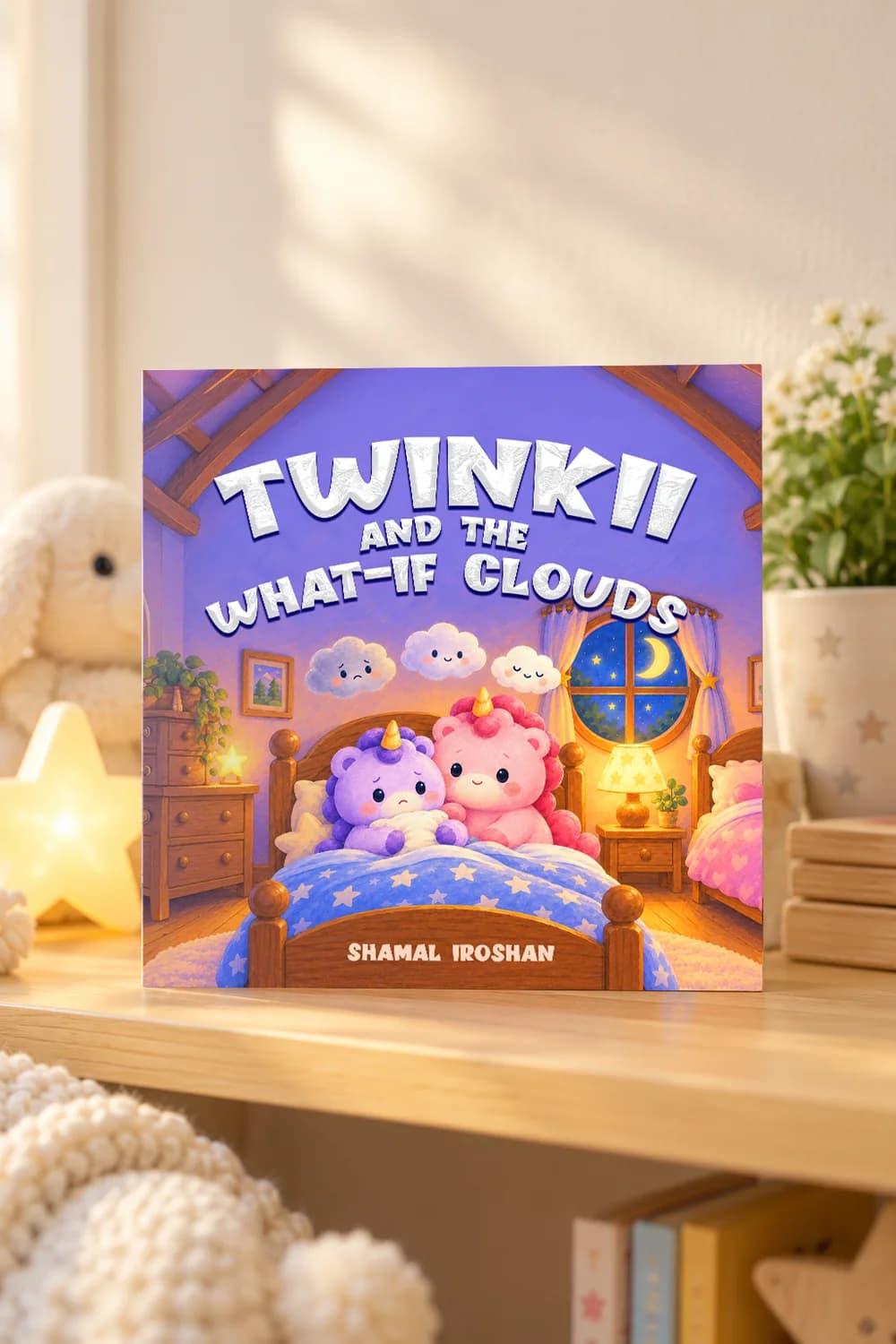
This game comes from my picture book, Twinkii and the What-If Clouds, a gentle bedtime story about big worries. Twinkii is a young unicorn whose head fills with gray what-if clouds when the lights go out. His calm big sister, Lumii, shows him how to find a what-is and take a few slow breaths, one at a time. It is written for ages 3 to 7 and is meant to be read together.
Mentioned in this guide
As an Amazon Associate I earn from qualifying purchases. Price and availability are shown on Amazon and can change.