The Eight Worldly Winds: A Practical Guide to Staying Steady
Praise, blame, gain, loss, pleasure and pain reach everyone. Here is a simple way to see them as weather, plus a five-minute daily check-in.
Shamal Iroshan
October 6, 2026 4 min read

This guide presents researched ideas and curated product selections. The products have not been personally used or tested.
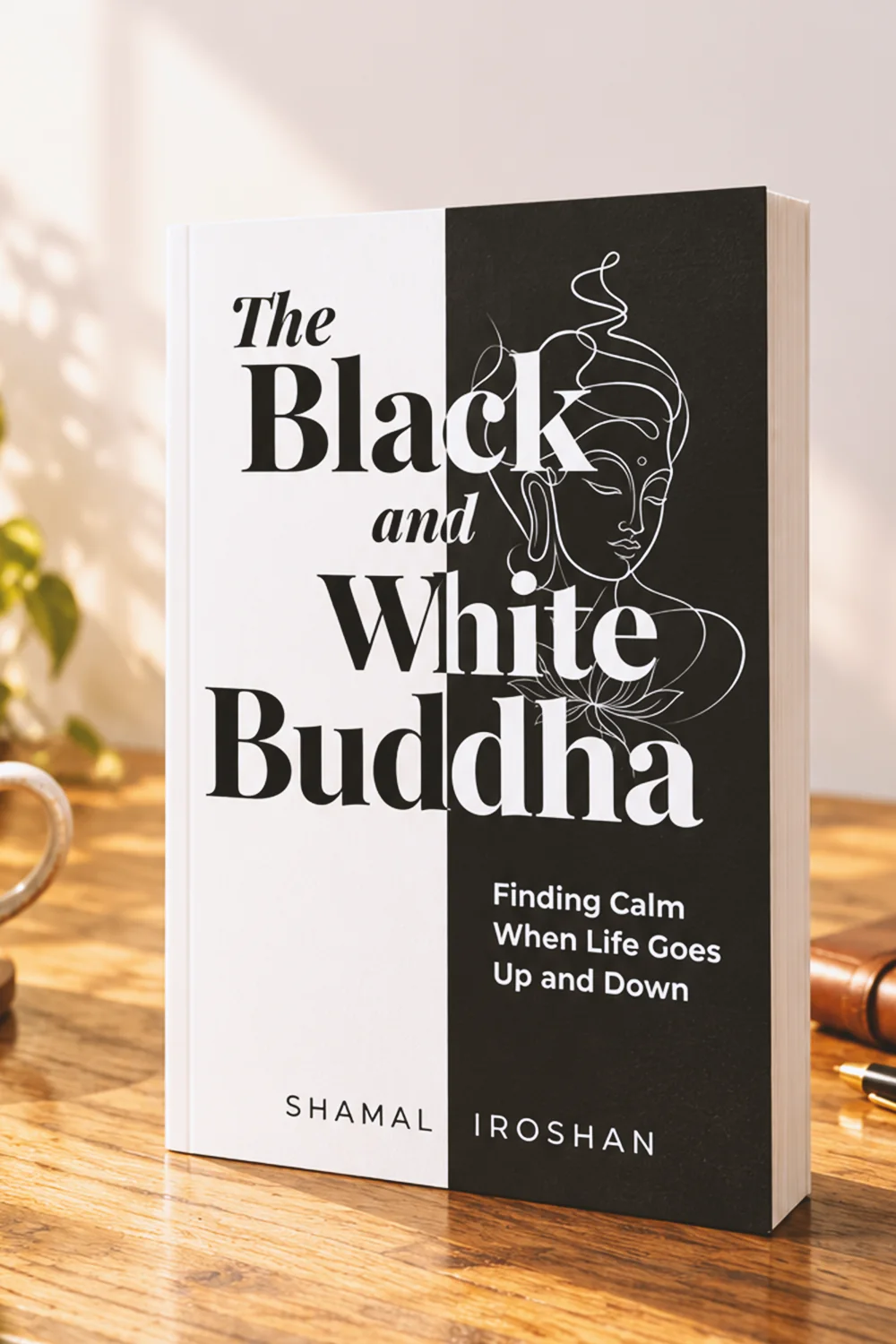
Cover image: An original AI-generated illustration of a quiet reading corner at dawn, not a photograph of a real place.
A late reply. A sharp comment. A plan that falls apart before lunch. None of it is dramatic, yet it can colour the whole day, and we tend to read each swing as a verdict on who we are.
This short guide explains an old way of seeing those swings, taken from early Buddhist teaching, and gives you a simple five-minute habit for staying steadier when they arrive.
Disclosure: I wrote the book mentioned at the end of this guide, The Black and White Buddha. The link to it goes to a page on this site with an Amazon affiliate link, so I may earn a commission on qualifying purchases in addition to my author royalties.
Why a bad day feels so personal
When something goes wrong, the mind quickly turns an event into a story about you. A cold reply becomes "they don't respect me." A missed target becomes "I'm not good enough." The event was small. The story is what stays all day.
Early Buddhist teaching suggests a gentler reading: most of these swings are not about you. They are conditions that reach every person, and they come and go.
The Eight Worldly Winds
The Lokadhamma Sutta (Anguttara Nikaya 8.6) describes eight conditions that everyone meets, arranged in four pairs. They are often called the eight worldly winds.
| One wind | Its opposite |
|---|---|
| Gain | Loss |
| Fame | Disgrace |
| Praise | Blame |
| Pleasure | Pain |
Notice that the left column is not "good" and the right column "bad". The point is that all eight are weather. We chase the left column and dread the right, and most of our suffering comes from being pushed back and forth between them.
You cannot stop the wind. You can learn how to stand, and how to set your sails.
One small habit for each pair
These are paraphrased from the book, in plain words. Pick one to try this week.
- Gain and loss: the open hand. When something arrives or leaves, loosen your grip. Count what remains, then ask: what is one thing I can do next?
- Fame and disgrace: the shadow check. Reputation behaves like a shadow. It follows what you do, and chasing it never works. Notice when you are watching your shadow, then take one small action for the tree.
- Praise and blame: sort the mail. Write down the exact words someone used. Then ask: is it true? Is it about me, or about them? Is it useful?
- Pleasure and pain: name the arrow. The Sallatha Sutta (Samyutta Nikaya 36.6) describes two arrows. The first is the pain itself. The second is the one we add with our reaction to it. Feel the first, spot the second, and soften.
A five-minute daily check
Think of it as a sailor's habit.
- Before you set out (one minute). Look at the sky. Which wind might blow today: a deadline, a conversation, a result you are waiting for?
- While you sail (a few seconds, when needed). When you feel a pull, name the wind. "That's blame." "That's a loss." Naming it is often enough to loosen it.
- When you tie up the boat (two minutes). Which wind blew today? What did I do? Is there one sail I would adjust tomorrow?
That is all. Most days, one small step is plenty.
If you want the full version
I put these ideas, with everyday stories, short practices, a five-minute reset for hard moments, a daily weather check and a seven-day calm plan, into a short book called The Black and White Buddha: Finding Calm When Life Goes Up and Down. No Buddhism background is needed.
See The Black and White Buddha
A note on limits
This guide and the book are for general reflection, not medical or mental health advice, and they are not a substitute for professional care. If you are struggling, please talk to a qualified health professional.
Sources
- Lokadhamma Sutta, Anguttara Nikaya 8.6 (the eight worldly conditions).
- Sallatha Sutta, Samyutta Nikaya 36.6 (the two arrows).
Mentioned in this guide
As an Amazon Associate I earn from qualifying purchases. Price and availability are shown on Amazon and can change.