A Nostalgia Puzzle Afternoon: Stories Across Generations
Plan a relaxed puzzle afternoon with parents, grandparents, or friends. Choose a decade, share a story, and explore a nostalgic puzzle book gift.
Shamal Iroshan
November 1, 2026 7 min read
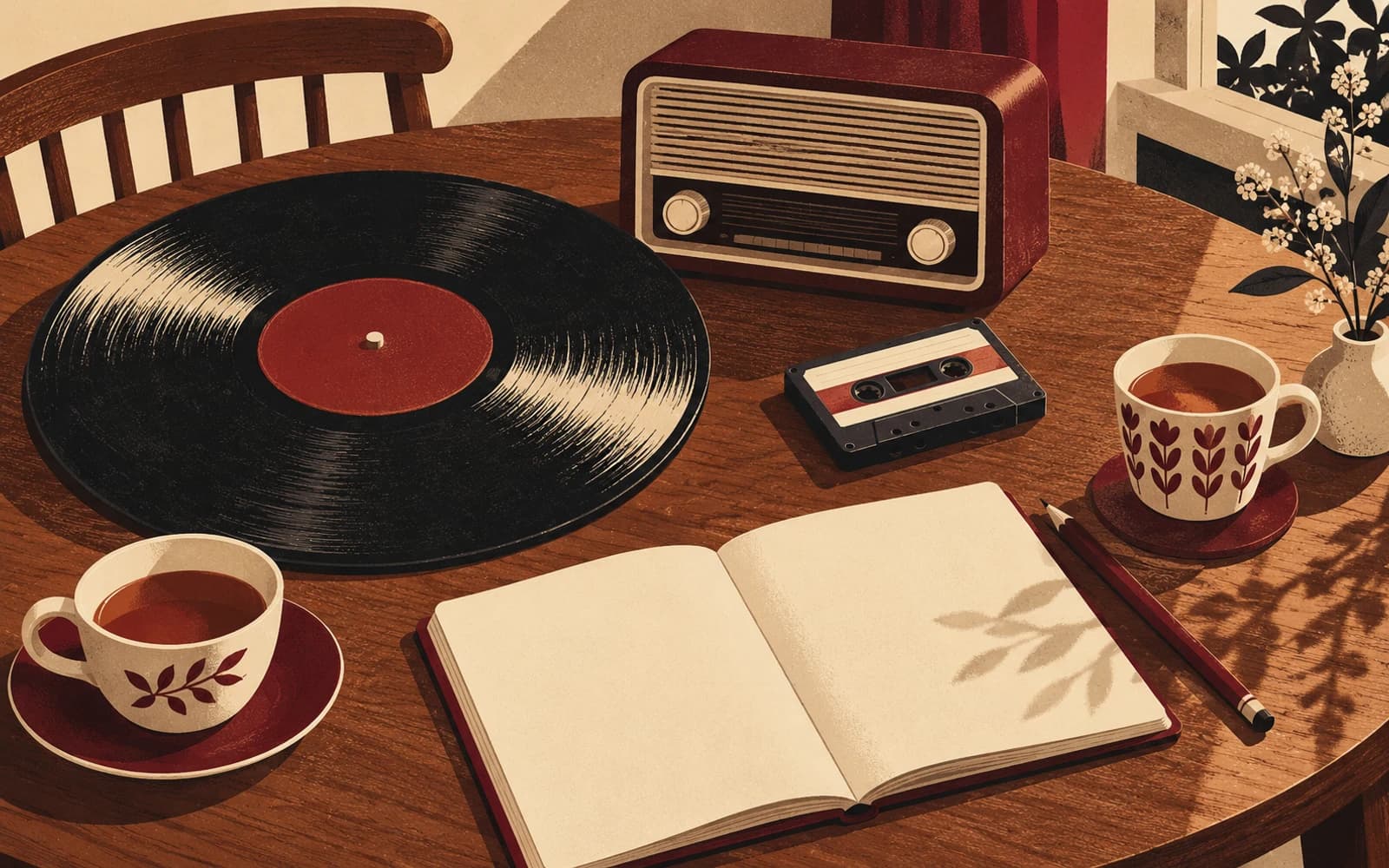
Illustration: Original AI-generated artwork, not a photograph.
A familiar song, an old television show, or the sound of a dial-up modem can give a family conversation somewhere to begin. A nostalgia puzzle book offers a simple invitation: solve something small, then share the story it brings to mind.
This guide shows how to plan a relaxed puzzle afternoon with parents, grandparents, friends, or a partner. There is no competition to organize and no need to remember every answer. You can also use the same ideas for a quiet solo break.
Author disclosure: I wrote The Years We Loved and the other Winnie Fairbourne books linked here. This guide features my own books. Product pages contain affiliate links.
A simple plan for a nostalgia puzzle afternoon
Choose a decade, choose one activity, and leave room for conversation. Start with a word search if someone prefers finding words, a crossword if they enjoy clues, or a quiz if the group would rather talk than write.
You do not need to turn an afternoon into a test. Ask, "What does that remind you of?" instead of keeping a score. Someone who did not live through the decade can still ask questions and listen.
| Choose this | If the reader enjoys | A way to share it |
|---|---|---|
| Word search | Finding familiar words in a grid | Take turns choosing the next word |
| Crossword | Working out answers from clues | Read a clue aloud and compare ideas |
| Quiz | Music, television, gadgets, and other references | Answer first, then share a related story |
| Memory prompt | Writing about personal experiences | Each person answers the same prompt in their own way |
The activities are for enjoyment. This is not a brain-training program or a promise of better memory, intelligence, or health.
What is inside The Years We Loved?
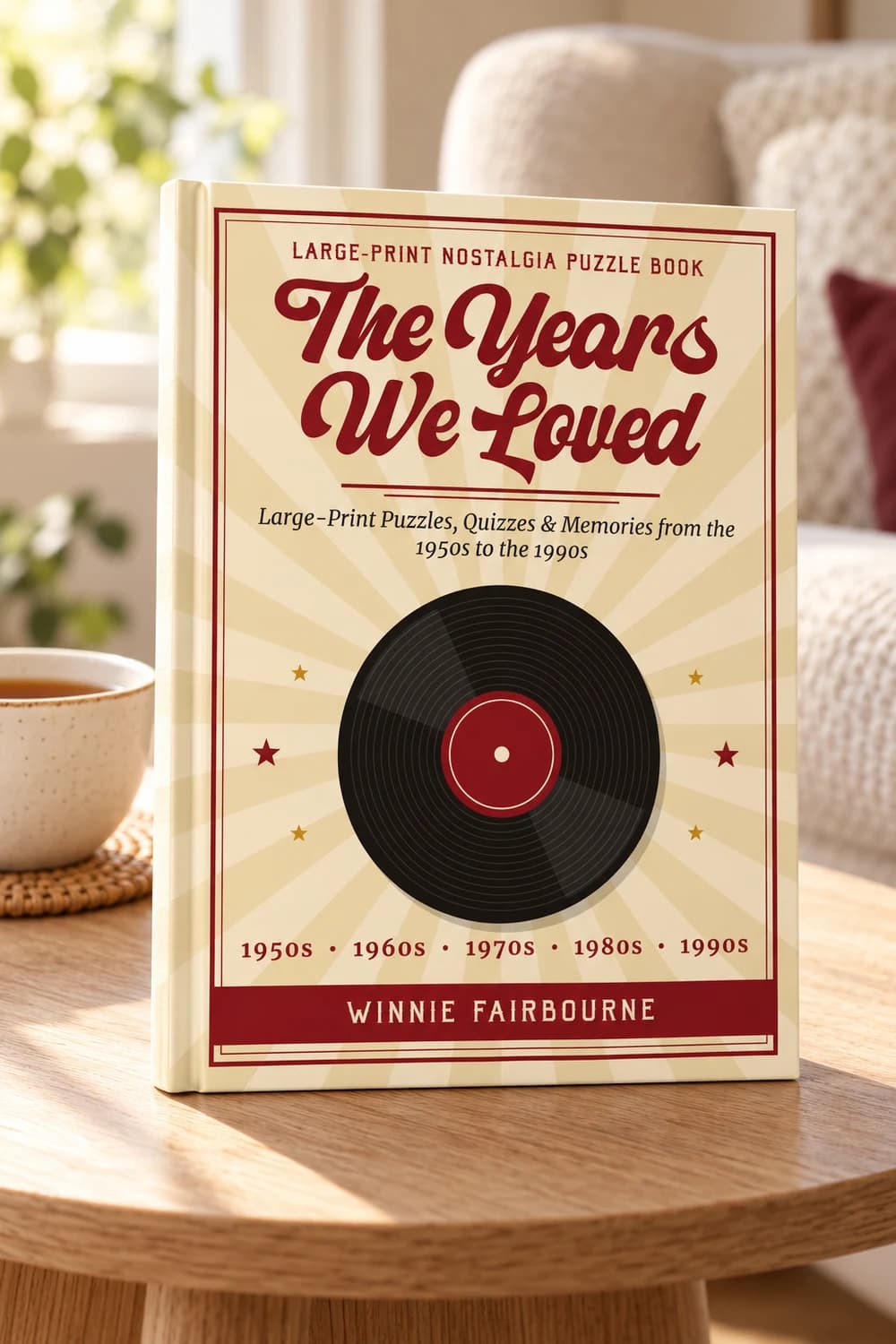
The Years We Loved: Large-Print Puzzles, Quizzes & Memories from the 1950s to the 1990s is a nostalgia puzzle book by Winnie Fairbourne. Its five decade chapters contain:
- 30 word searches: Six per decade. The instructions say words run forward across, down, or diagonally, never backward.
- 15 crosswords: Three per decade, with numbered clues and answer lengths.
- 60 multiple-choice quiz questions: Twelve per decade.
- Personal memory prompts: Space to write about songs, places, people, and experiences.
- Answers at the back, extra memory pages, and a certificate page.
The hardcover interior has 86 pages at 8.25 x 11 inches. The book is in English. Many references concern American or British popular culture, so familiarity will vary by reader and country. Country buttons choose an Amazon store; they do not promise a translated edition.
The title describes the book as large print. Letter sizes vary between activities, clues, and answer pages. Review the interior preview on Amazon for the intended reader rather than assuming every page will meet a particular visual need.
Explore The Years We Loved and choose your Amazon country
Start with a decade the reader enjoys
The oldest decade is not automatically the best place to start. A reader may enjoy music discovered later, a movie watched with their children, or a gadget from their first job.
| Decade | Themes in the book | An original conversation starter |
|---|---|---|
| 1950s | Diners, television, foods, fashion | What counted as a special treat in your home? |
| 1960s | Music, the Moon landing, changing fashions | Which song do you associate with a particular place? |
| 1970s | Disco, movies, home life, television | What did your favorite room look like? |
| 1980s | Arcades, music videos, portable gadgets | What was a gadget you were excited to try? |
| 1990s | Sitcoms, movies, dial-up, mixtapes | How did you keep in touch with friends? |
These prompts are invitations, not assumptions about everyone's life. Not every memory is happy, and nobody needs to answer a personal question. Move to another topic whenever someone prefers.
Try these three conversation prompts now
You can try this part without buying anything. Pick one prompt and let each person answer, pass, or ask a follow-up question.
- The song: Think of a song connected to a place. Where were you when you heard it, and who else was there?
- The object: What everyday object would a younger family member need explained: a cassette, a paper road map, or something else?
- The tradition: What small family routine would you like someone to remember?
There are no correct answers. A younger person might describe a recent song or their own family routine. The point is to hear different experiences, not to prove who remembers the most.
If someone wants to write, record their words with permission. A few sentences can be enough. Keep personal stories private unless the person agrees to share them.
Make the table comfortable
Use good light, a comfortable seat, and a pencil. Put the book where the person solving can see it easily. If reading together is awkward, let one person read aloud rather than having everyone lean over the same page.
Begin with one activity. You can stop after a few words or a single clue. Leave the answer pages closed until the group wants them; using an answer is fine when a question stops being enjoyable.
Tea, a notebook, or a familiar playlist can be your own additions. They are not included with the book. Keep music low or leave it off if it makes conversation harder.
A gift idea for parents and grandparents
This book may suit someone who already enjoys word searches, crosswords, quizzes, or talking about earlier decades. Choose by interests rather than age alone. Some readers prefer a story, some enjoy a puzzle, and others would rather receive time together.
A handwritten invitation can make the gift personal: "Shall we choose a decade and try a quiz together?" A pencil or notebook can be an optional extra you supply yourself.
For Christmas, a birthday, or a visit, check the actual Amazon delivery estimate and selected format before ordering. This site does not promise stock or arrival dates. The supplied links may select a particular edition; inspect the listing rather than assuming every country offers the same formats.
View the book, gallery, and country options
Prefer solving clues instead of recalling trivia?
Nostalgia quizzes draw on familiarity with cultural references. A whodunit puzzle offers a different experience: compare the evidence supplied on the page and rule out suspects.
| Book | Main activity | Choose it for |
|---|---|---|
| The Years We Loved | Word searches, crosswords, quizzes, and personal prompts | Nostalgia and conversation across five decades |
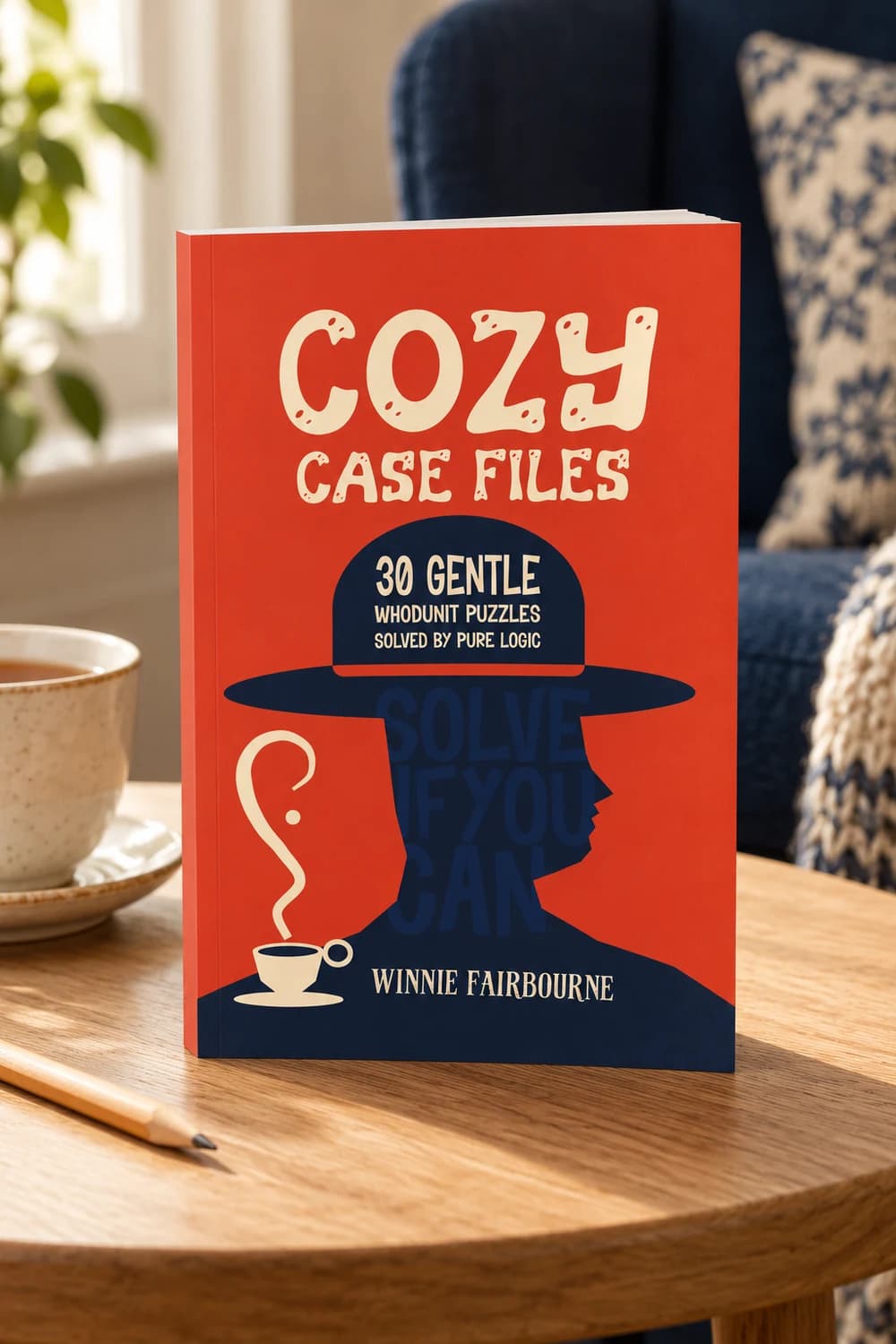
| Cozy Case Files | 30 gentle whodunits with hints and explained solutions | Year-round missing-object mysteries |
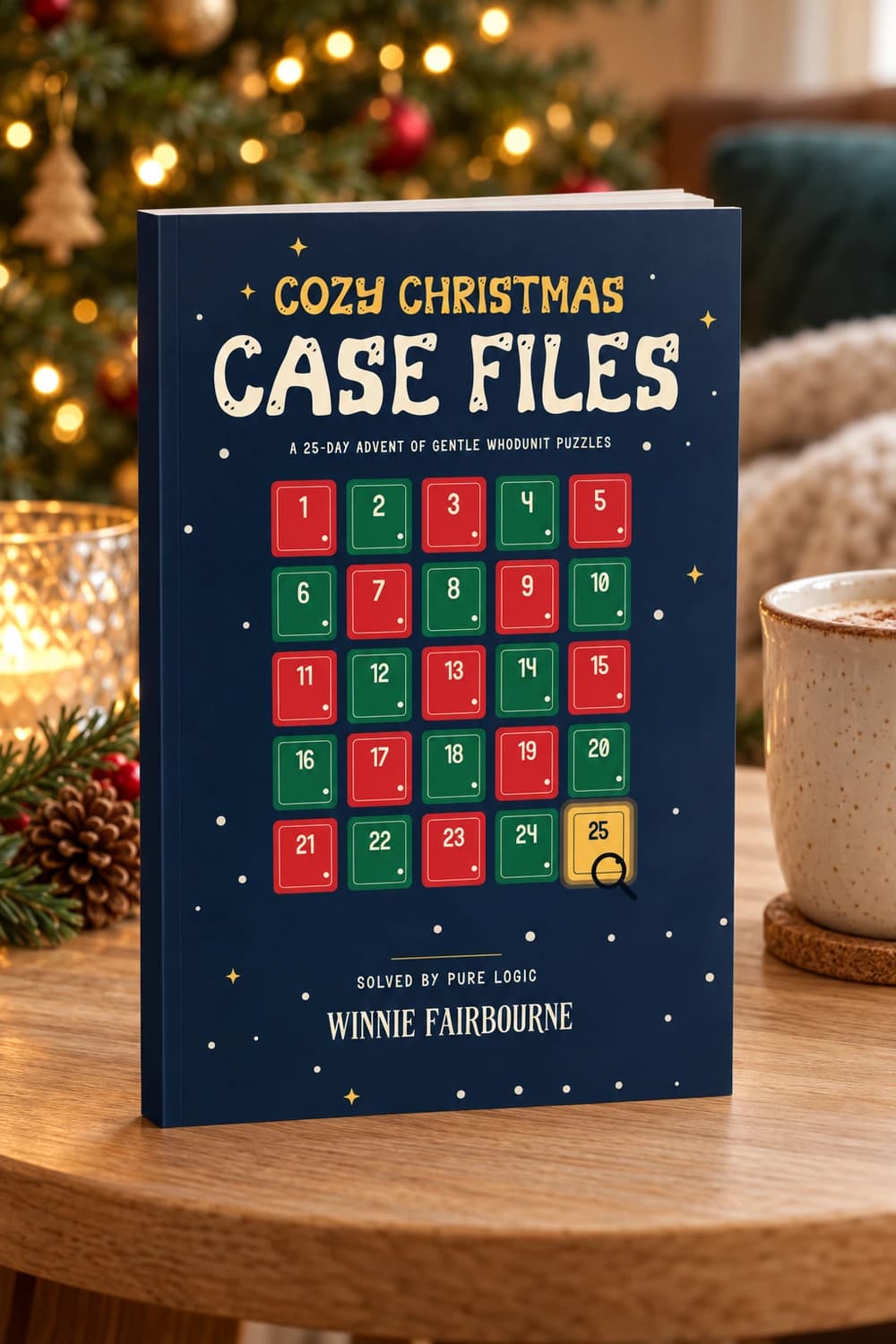
| Cozy Christmas Case Files | 25 festive whodunits arranged as a December countdown | A seasonal mystery gift or holiday puzzle routine |
These are separate books, not a bundle. I wrote all three as Winnie Fairbourne. For a free sample of elimination-style reasoning, try the family mystery puzzle guide. For a festive approach, see the Christmas mystery gift guide.
Common questions
Do readers have to remember every decade?
No. Choose a familiar chapter or try a different activity. Word searches provide a word list; quizzes can become a conversation even when nobody knows an answer. Answers are included at the back.
Is this only for older adults?
No. It may appeal to anyone interested in the 1950s through the 1990s. A younger family member can join the conversation, although cultural references and crossword clues may be unfamiliar.
Is every page the same print size?
No. Layout and letter sizes vary by activity and between puzzle and answer pages. Inspect the listing's interior preview for the reader's preferences.
Is this suitable as a treatment or memory assessment?
It is a recreational puzzle book, not a treatment, assessment, or promise of cognitive improvement. Choose it for the activities and conversations it offers.
Does Global mean worldwide delivery?
No. Global opens Amazon.com. Delivery, format, language, seller, and availability depend on the listing and destination. The product page also offers USA, UK, Canada, Germany, Italy, and Japan.